

How Super Contribution Timing Can Affect Your Concessional Cap
Super contributions are counted based on when they are received by the super fund, not when the wages were earned. This timing difference can affect which financial year a contribution belongs to, particularly for the June quarter super payment. Understanding how super contribution timing can affect your concessional cap can help you plan contributions more effectively before the end of the financial year.

Why Super Contribution Timing Matters
Many people assume super contributions are counted based on when wages are earned. However, for tax and super purposes, contributions are generally counted when the super fund receives the payment.
This rule can affect how much of your concessional contribution cap is used in a financial year.
For example, the super guarantee for the April to June quarter is not due until 28 July. Because of this, many employers pay this contribution in July.
When this occurs, the contribution is counted in the next financial year, even though the wages were earned before 30 June.
The ATO explains how super contributions are counted here:
June Quarter Super Contributions Explained
Employers generally pay super guarantee contributions quarterly. The standard payment deadlines are:
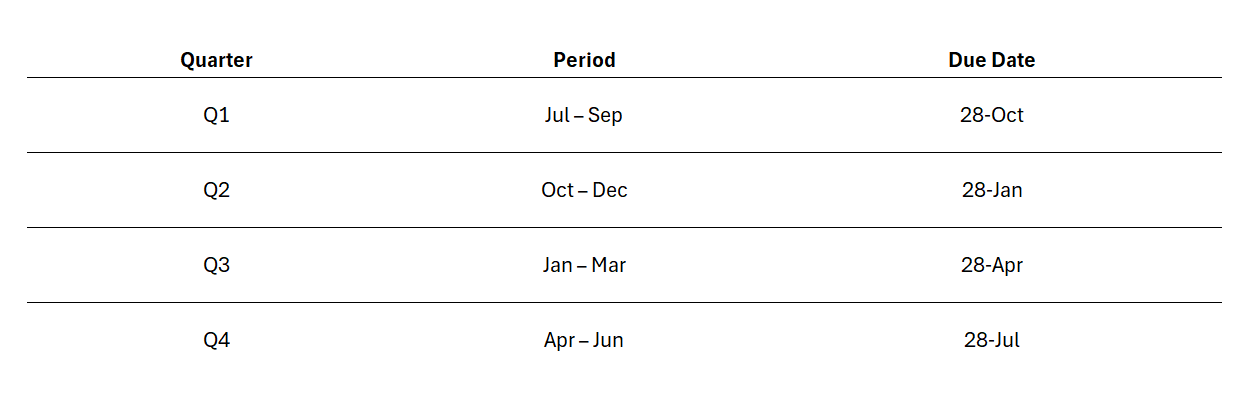
he June quarter super contribution is the one that often affects contribution timing.
Although the wages are earned before the end of the financial year, the super contribution may be paid after 30 June. When this happens, the contribution is counted in the next financial year for concessional cap purposes.
More information about employer payment deadlines can be found at ATO: Super Guarantee.
Understanding the Concessional Contribution Cap
Concessional contributions generally include:
- Employer super guarantee contributions
- Salary sacrifice contributions
- Personal deductible super contributions
For the 2025–26 financial year, the concessional contributions cap is $30,000.
Importantly, contributions count towards the cap when the super fund receives the payment, not when the employer obligation arose.
Further details about concessional contributions are available here:
Because of this rule, super contribution timing can directly affect how much of your concessional cap is used in a financial year.
Example of How Timing Affects Your Concessional Cap
Consider an employee earning $150,000 with standard super guarantee contributions.
If the employer pays:
- Super for July to March during the 2025–26 financial year
- The April to June contribution in July 2026
Only the first three quarters will count towards the 2025–26 concessional cap.
The June quarter contribution will instead count towards the 2026–27 cap.
For some individuals, this may create an opportunity to make additional concessional contributions before 30 June.
When Super Contribution Timing Can Create Issues
Super contribution timing becomes more important where someone is:
- Salary sacrificing into super
- Making personal deductible contributions
- Close to the concessional contribution cap
- Using carry-forward concessional contributions
If an employer decides to pay the June quarter super before 30 June, the contribution will count in that financial year instead.
This may push a person over their concessional cap, particularly if additional contributions have already been made.
The ATO explains how excess concessional contributions are treated here.
Reviewing Your Super Contributions Before 30 June
..Before the end of the financial year, it can be helpful to review:
- Employer super contributions already received by your fund
- Any salary sacrifice arrangements
- Planned personal deductible contributions
- Available carry-forward concessional contributions
Small timing differences can change which financial year a contribution falls into.
Further guidance on ATO: carry-forward concessional contributions.
How Payday Super Will Change Contribution Timing
It is also worth noting that the upcoming introduction of Payday Super from 1 July 2026 will change how super contributions are paid. Under the new system, employers will generally be required to pay super at the same time as salary and wages rather than quarterly.
This means super contributions will typically be paid much closer to the payroll date, reducing the likelihood that June quarter contributions fall into the next financial year.
You can read more about these upcoming changes in our article on Payday Super and what it means for employers.
Super contribution timing can affect how contributions are counted against your concessional cap, particularly around the June quarter. Because contributions are counted when they reach the super fund rather than when the wages were earned, reviewing your contributions before 30 June can help ensure they align with your super planning for the year.